

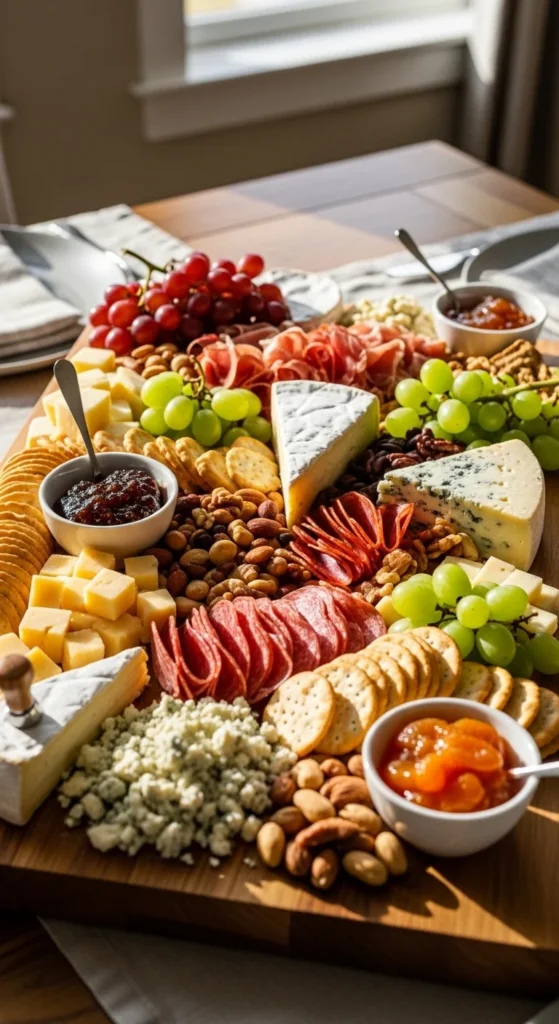
When guests arrive unexpectedly, a quick charcuterie board can save the day. It feels thoughtful, looks impressive, and requires no cooking. With the right approach, you can assemble a beautiful board in under twenty minutes using simple store-bought ingredients. These lightning-fast ideas focus on smart shortcuts, easy folding tricks, and flexible pairings that remove stress from entertaining. Each option helps you build a board that looks full, balanced, and inviting without overthinking the process.
1. Three-Cheese Starter Board
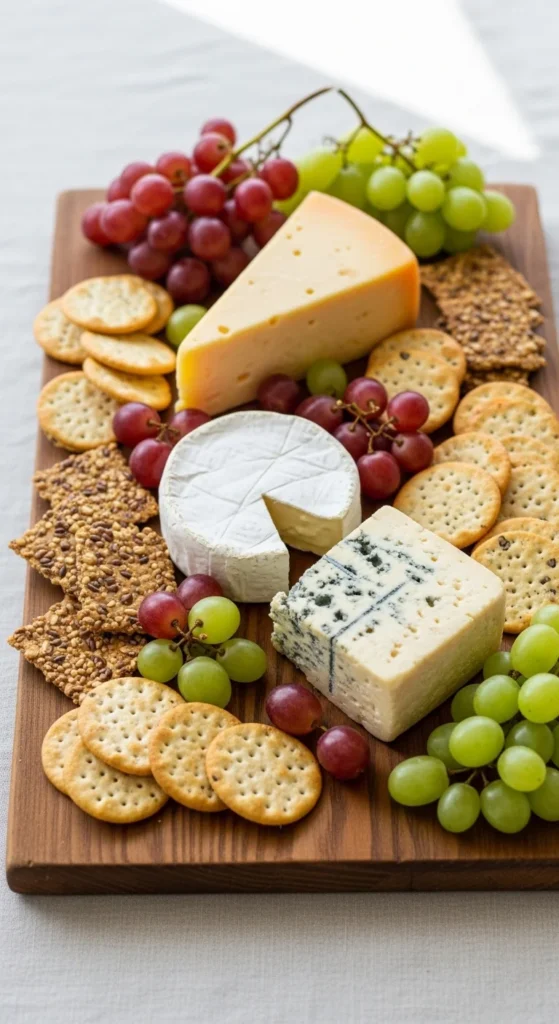
Starting with three cheeses creates instant structure. A soft cheese, a semi-hard cheese, and a firm cheese offer variety without confusion. This simple formula prevents overcrowding and gives your board a clear foundation.
Place the cheeses first in different areas of the board. Slice one, cube another, and leave one whole with a knife. This adds visual interest without extra effort.
Serve with plain crackers and grapes. Add nuts in small piles to fill space.
2. Salami Rose Centerpiece

Salami roses look fancy but take seconds to make. They turn basic deli meat into a focal point. Guests love grabbing individual folds.
Fold salami slices into quarters. Tuck into a small bowl or ramekin. Fan outward until full.
Place in the center. Surround with cheese cubes.
3. Prosciutto Ribbon Folds
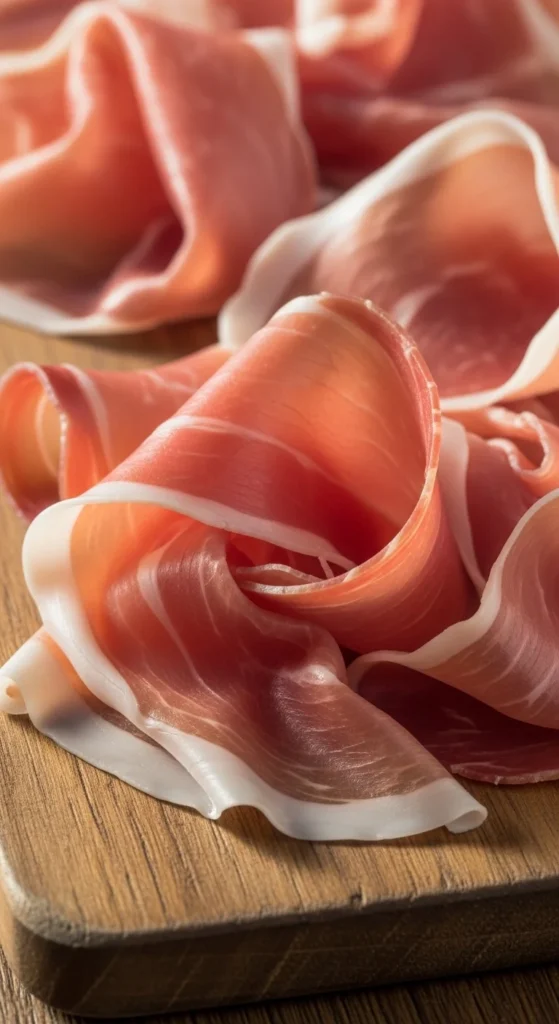
Ribbon folds create height and softness. They also make prosciutto easier to grab.
Fold each slice back and forth loosely. Stack in small piles.
Pair with brie and fruit nearby.
4. Mini Date Night Board
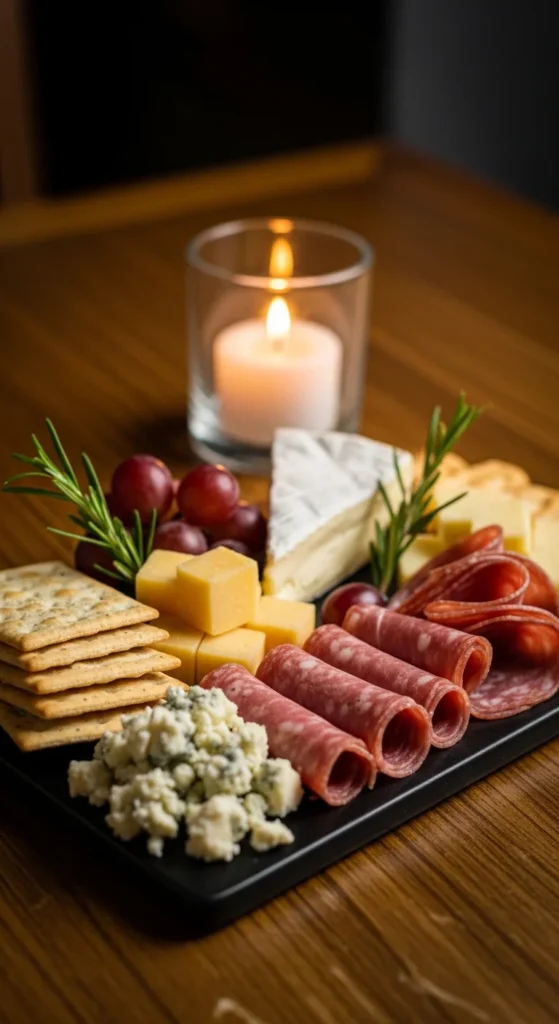
Small boards feel intimate and easy. They work well for two to four people.
Choose two cheeses, one meat, and two sides. Arrange in zones.
Serve on a small cutting board or plate.
5. Pantry-Only Grazing Board
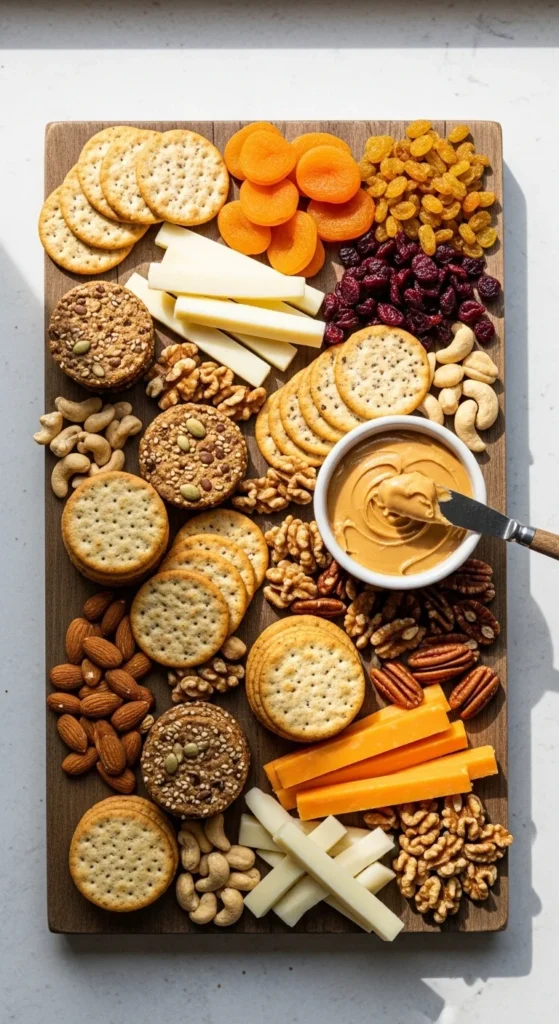
This board uses shelf-stable foods. It works when the fridge is nearly empty.
Combine crackers, nuts, dried fruit, and cheese sticks. Add peanut butter in a ramekin.
Serve immediately.
6. Sweet and Savory Brie Board

Brie pairs well with sweet spreads. This creates contrast and balance.
Spoon fig jam over brie. Sprinkle pecans.
Serve with crackers and apple slices.
7. Rainbow Fruit Filler Board

Fruit plays a major role on quick charcuterie boards because it adds color, sweetness, and freshness without any cooking. A rainbow-style fruit layout makes the board feel lively and generous. It also helps soften the look of heavier items like cheese and cured meats.
Choose two to four fruits in different colors. Grapes, strawberries, blueberries, and orange slices work well. Wash and dry everything. Place small clusters between cheeses and meats rather than spreading fruit thinly across the board.
Serve chilled or at room temperature. Keep extra fruit in a bowl nearby for easy refills.
8. Crackers and Dip Trio
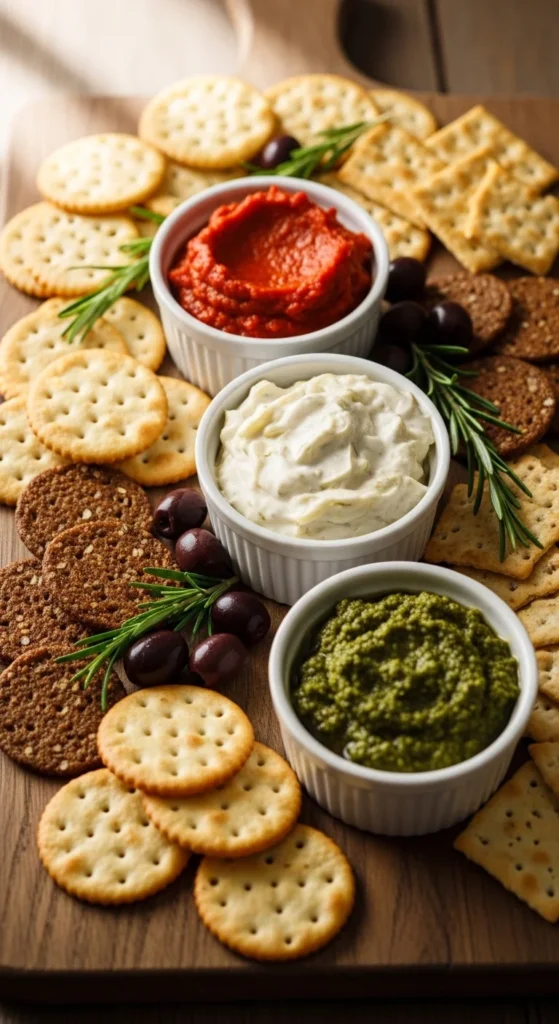
A trio of dips gives guests choices and makes a simple board feel complete. It also adds moisture and flavor contrast next to dry crackers and firm cheeses. Using small bowls keeps crackers from becoming soggy.
Pick three easy dips such as hummus, olive tapenade, and mustard. Spoon each into a small ramekin. Place the bowls in different areas of the board with crackers beside each one.
Serve with small spoons. Refill dips as needed during the gathering.
9. Odd-Number Cheese Board
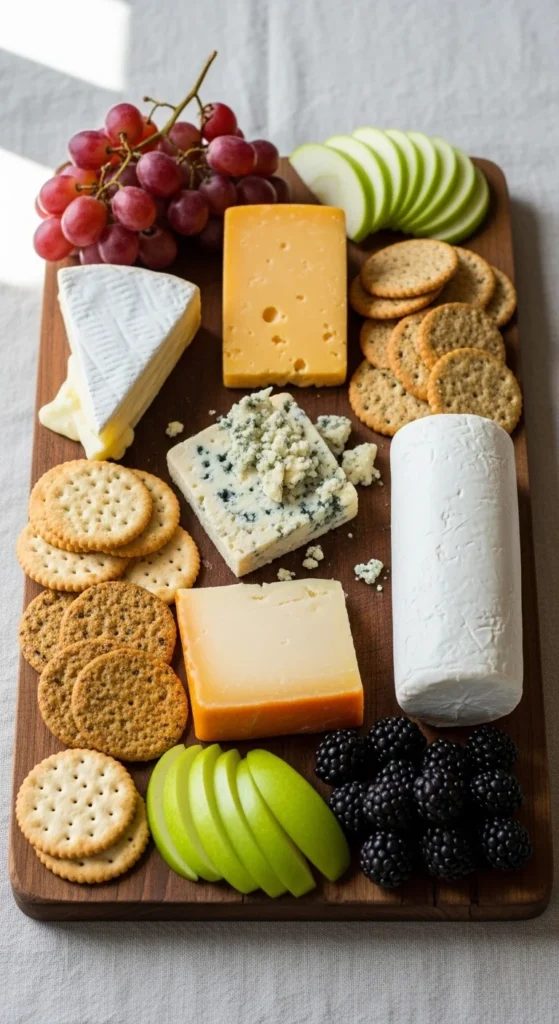
Odd numbers create a more relaxed and natural look on charcuterie boards. Using three or five cheeses keeps the layout from feeling stiff or overly planned. It also gives guests a better sense of variety.
Choose a mix of textures such as soft, semi-hard, and firm cheeses. Place each cheese in a separate spot across the board. Slice or cube one or two for easy grabbing.
Add crackers, nuts, and fruit around the cheeses to finish the layout.
10. Kit Plus One Upgrade Board
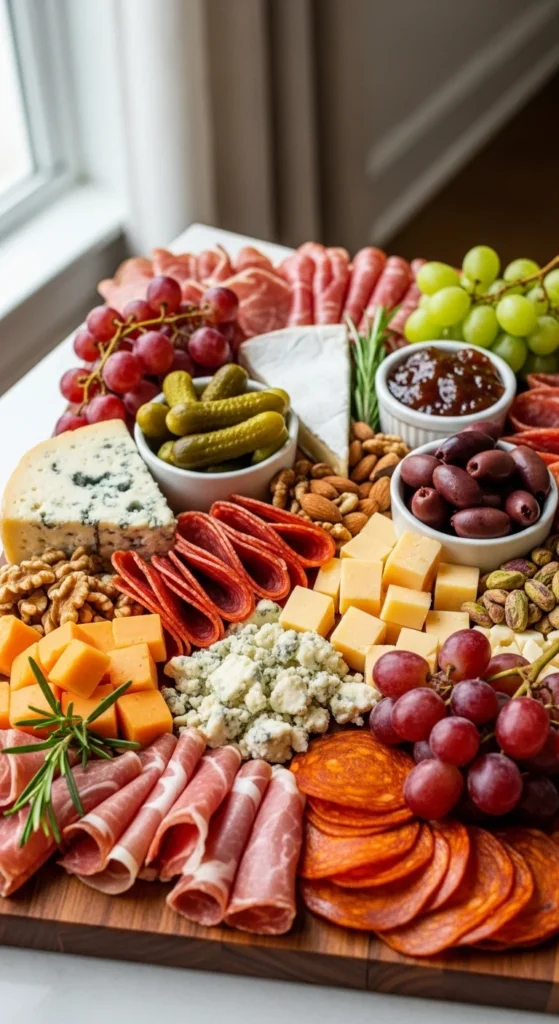
Store-bought charcuterie kits save time and reduce planning. With one simple upgrade, they look more homemade and abundant. This trick works well for last-minute hosting.
Open the kit and arrange everything on a larger board. Add one fresh item such as grapes, apple slices, or nuts. Spread the new addition in small clusters.
Serve immediately. Keep extra crackers nearby if needed.
11. Rosemary Garnish Board

Fresh herbs give charcuterie boards a finished look with almost no effort. Rosemary adds color, light aroma, and a subtle rustic feel. It instantly makes a simple spread look more styled.
Wash and dry small rosemary sprigs. Tuck them into open spaces between cheeses and meats. Use sparingly so food remains the focus.
Serve immediately. Remove wilted herbs as needed.
12. Mini Cracker Sandwich Board

Mini cracker sandwiches make grazing easier. Guests can grab one bite instead of assembling their own. This keeps traffic moving around the board.
Place cheese slices and salami between crackers. Make several small stacks. Arrange in rows or clusters.
Serve at room temperature. Refill stacks as needed.
13. Sweet Crunch Nut Board
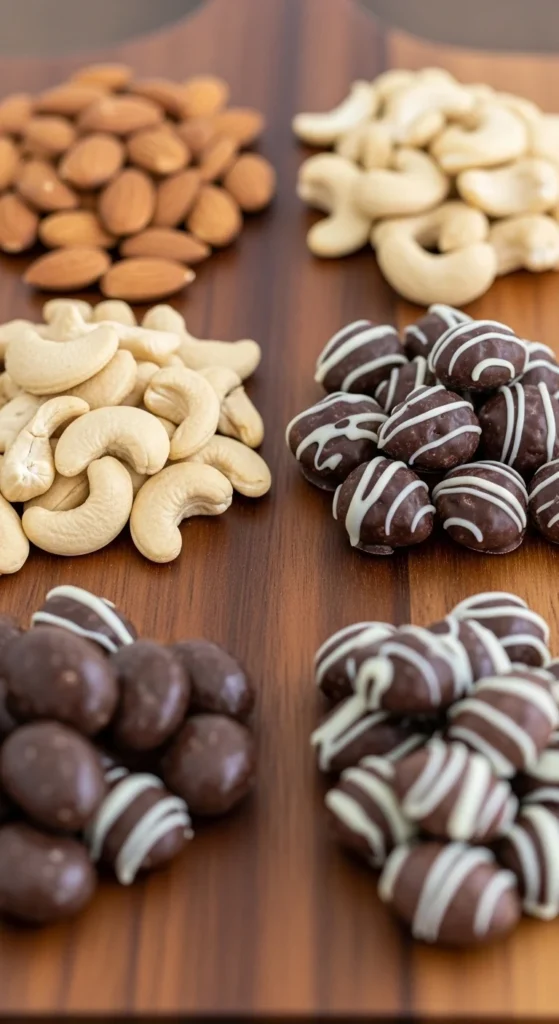
Nuts add crunch and help balance creamy cheeses. A mix of plain and sweet nuts gives contrast. They also fill gaps quickly.
Place small piles of different nuts around the board. Avoid large mounds.
Serve at room temperature. Keep extra nuts nearby.
14. Zone-Style Layout Board
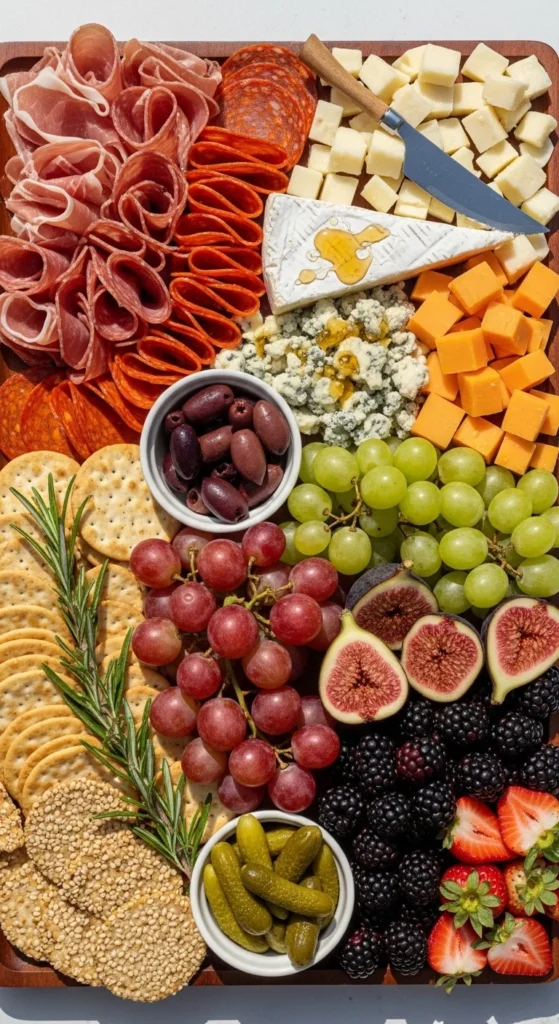
Zoning keeps flavors organized. It also makes boards easier to build.
Group meats in one area. Place cheeses in another. Add fruits and crackers in separate zones.
Serve immediately. Adjust spacing as guests eat.
15. Mini Cheese Cube Board
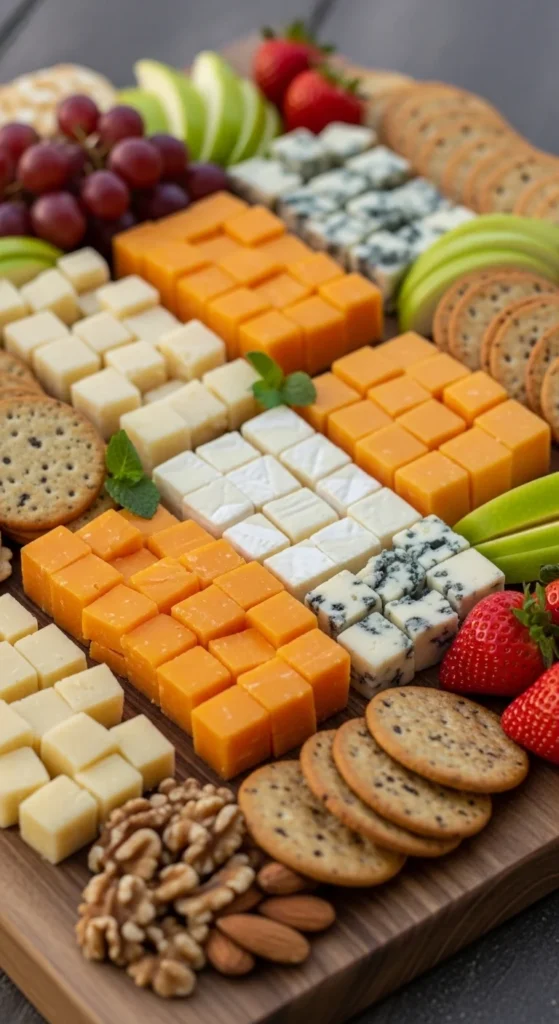
Cheese cubes are easy to grab. They reduce mess and speed setup.
Cut cheeses into bite-sized cubes. Arrange in small piles.
Serve at room temperature. Add toothpicks if desired.
16. Mini Ramekin Jam Board
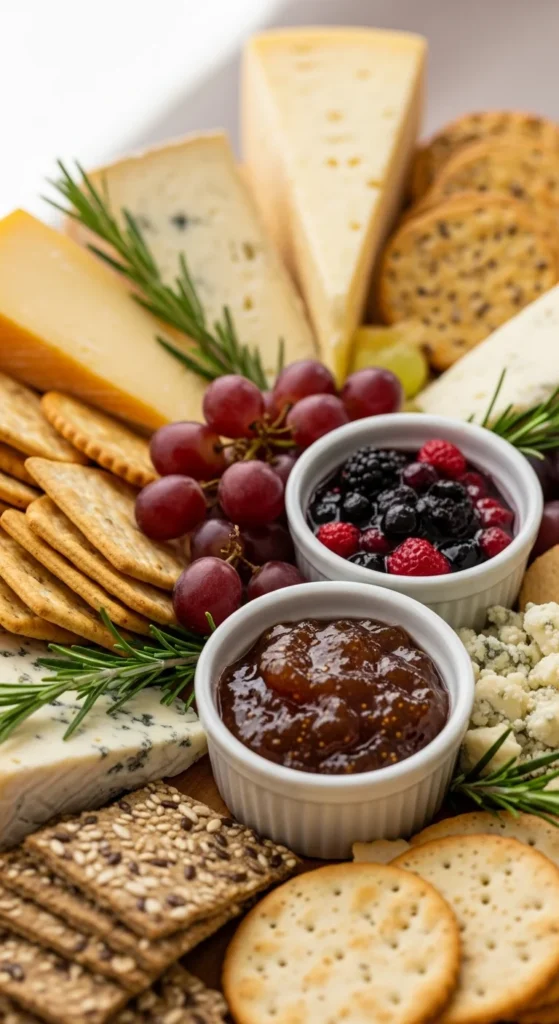
Sweet spreads bring balance to salty meats and rich cheeses. Using small ramekins keeps the board neat and prevents sticky messes. It also makes the board feel more complete.
Choose one or two jams such as fig or berry. Spoon into small bowls. Place near soft cheeses.
Serve with small spoons. Refill if needed.
17. Cracker Fan Display
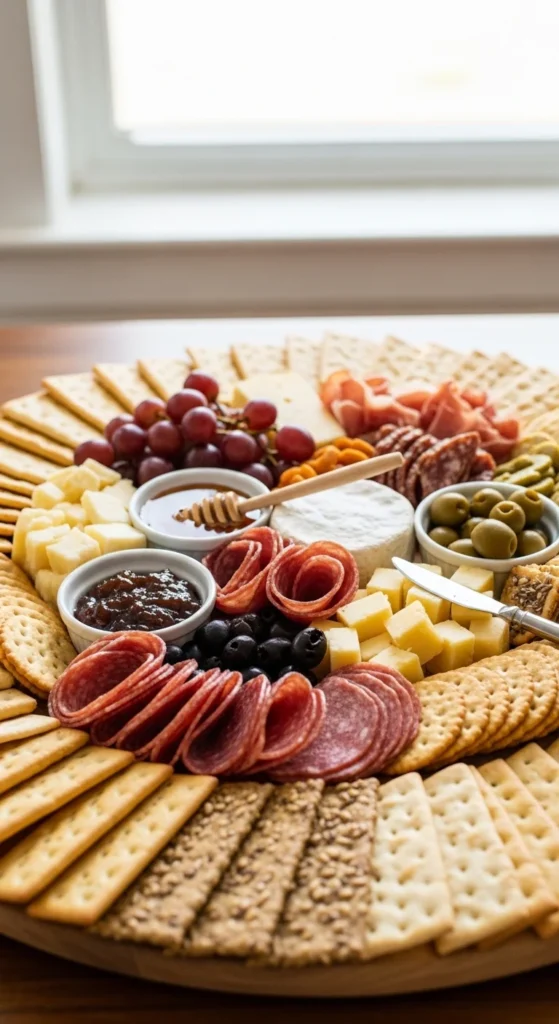
Fanned crackers look organized and abundant. They also make grabbing easy.
Stack crackers upright in small arcs. Place near cheeses and dips.
Serve at room temperature. Keep extra crackers nearby.
18. Date Night Mini Builds
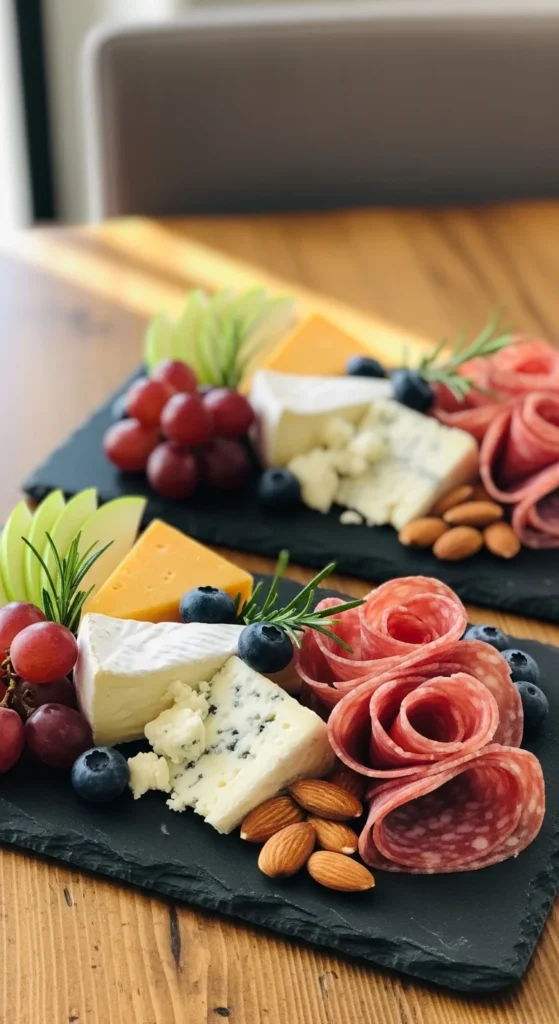
Mini boards reduce pressure and waste. They feel personal and thoughtful.
Use small plates. Add one cheese, one meat, fruit, and crackers.
Serve immediately. Customize per person.
19. Allergy-Friendly Swap Board
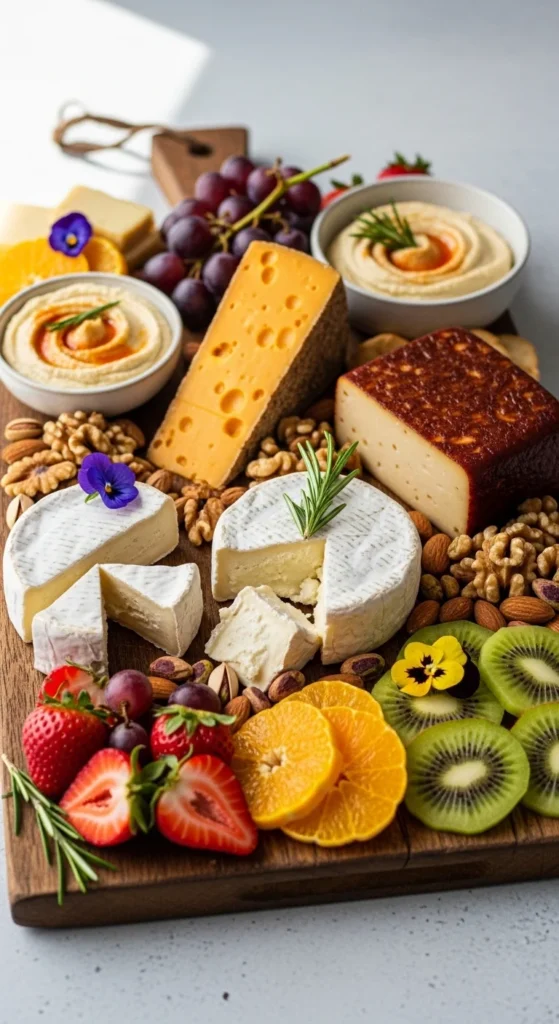
Simple swaps help everyone enjoy the board. This keeps hosting inclusive.
Add vegan cheese or hummus. Use fruit, nuts, and seed crackers.
Label items if needed. Serve together with other boards.
20. Curve-Style Flow Board
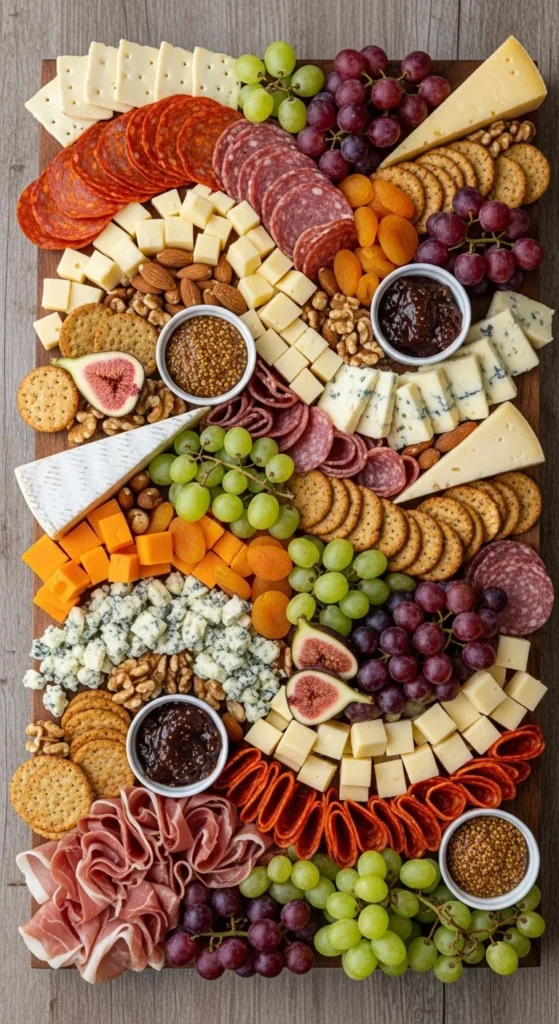
Curves create natural movement. They make boards feel relaxed.
Arrange items in gentle arcs. Avoid straight rows.
Serve immediately. Adjust as guests eat.
21. Negative Space Board
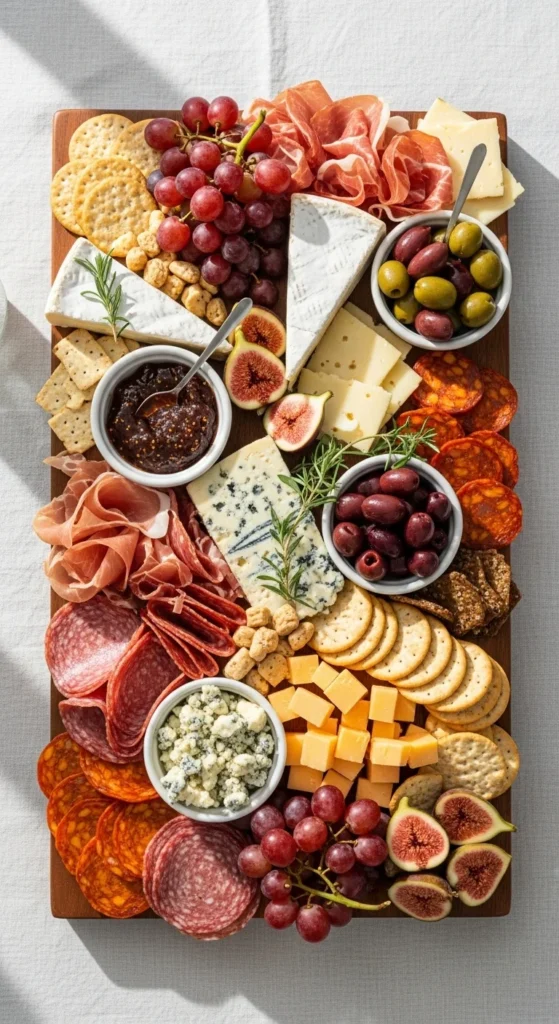
Leaving space prevents overcrowding. It makes the board easier to read.
Place items in clusters. Leave small gaps.
Serve at room temperature. Refill when needed.
22. Themed Color Board
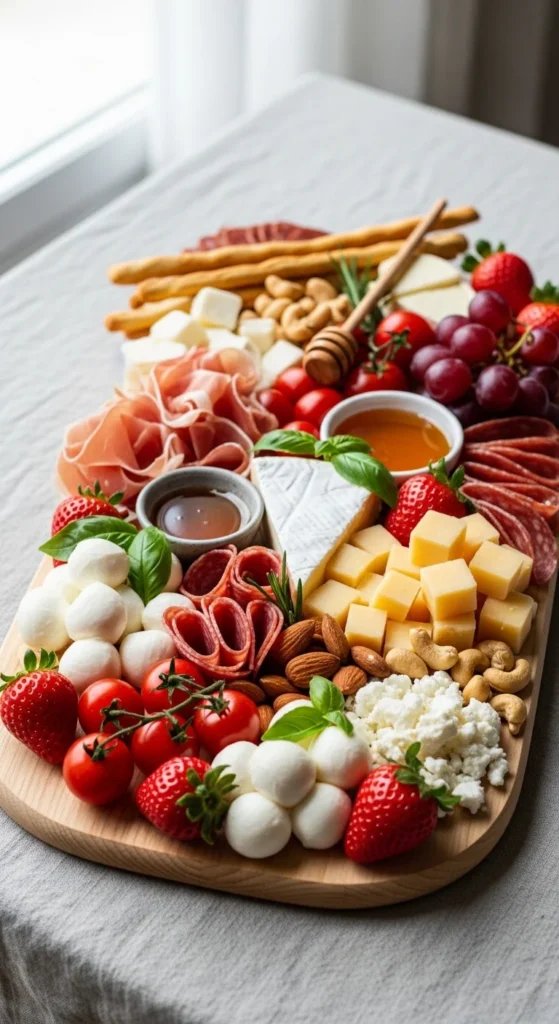
Color themes feel intentional. They are easy to plan.
Choose two colors. Select matching cheeses, fruit, and crackers.
Serve immediately. Add herbs for contrast.
23. Repeat Layout Crowd Board
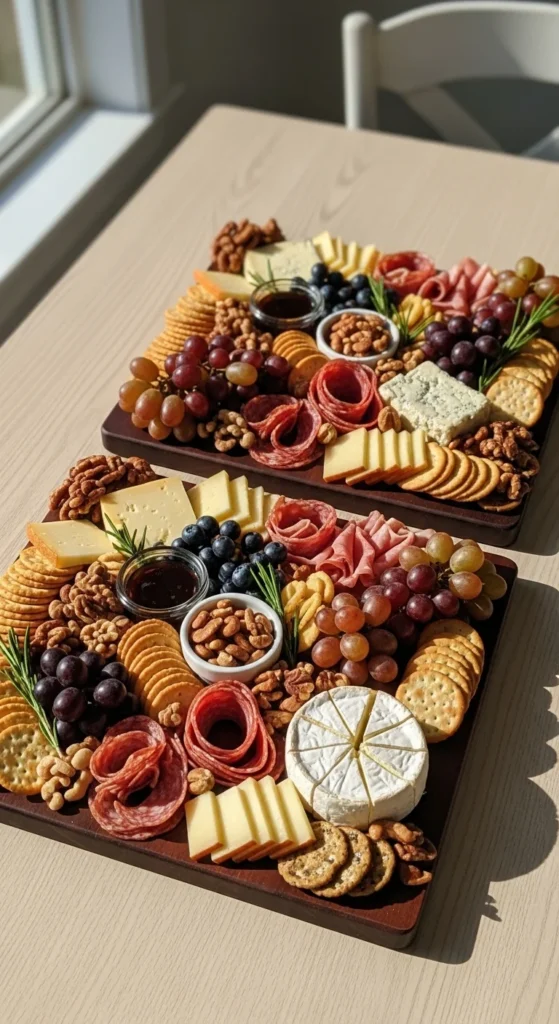
Repeating layouts saves time. It works well for larger groups.
Build one board. Copy the same pattern on another.
Serve boards in different areas.
Conclusion
Quick charcuterie boards remove stress from entertaining because they rely on smart structure, not complicated prep. When you start with cheeses, fold meats for texture, and fill gaps with fruit and crackers, the board builds itself. Small details like ramekins, curved layouts, and color balance make even pantry ingredients look thoughtfully arranged.
Keep a few staples on hand such as pre-sliced meats, mixed nuts, crackers, and one soft cheese. Then mix and match using the ideas in this list. Whether you build one large grazing board or several mini versions, you can assemble everything in about twenty minutes without cooking. Save this guide so you always have a stress-free hosting plan ready.

Leave a Reply