

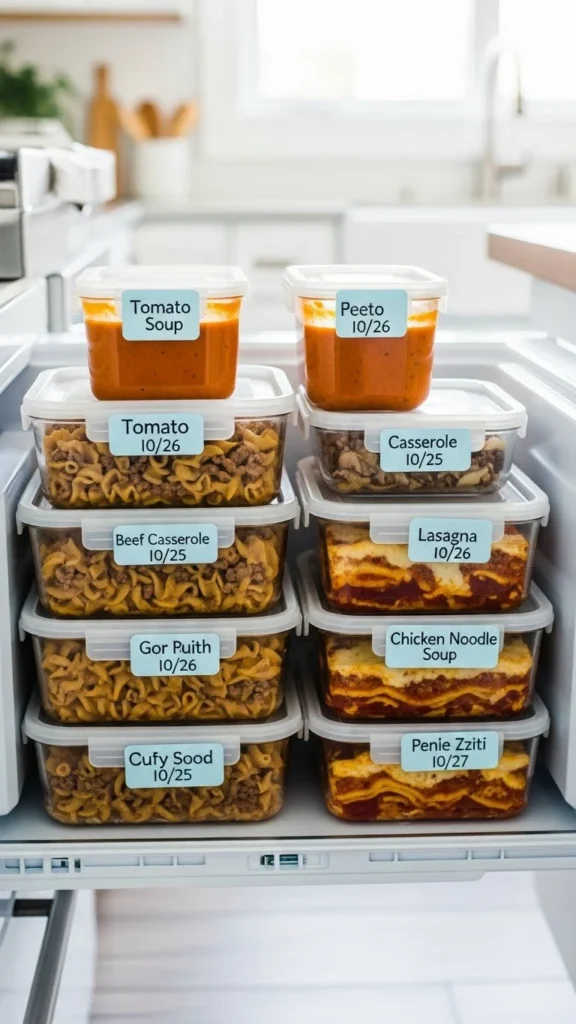
[Image Prompt] A bright kitchen scene with labeled freezer containers filled with soups, casseroles, and pasta dishes neatly stacked in a freezer drawer.
With the right techniques, you can cook freezer meals that stay fresh for weeks and make your future self very grateful. Here’s exactly how to do it.
Choose Meals That Freeze Well
Not every dish loves the freezer. The first step to long-lasting freezer meals is choosing recipes that hold up over time.
Best foods for freezing:
- Soups, stews, and chili
- Casseroles and baked pasta
- Cooked grains like rice or quinoa
- Saucy proteins (chicken, beef, lentils)
Foods to freeze with caution:
- Cream-heavy sauces (add cream after reheating)
- Watery vegetables like lettuce or cucumbers
- Fried foods that lose crispness
Starting with freezer-friendly recipes sets you up for success.
Prep Ingredients with Freezing in Mind
How you prepare ingredients before cooking affects how they taste weeks later.
Smart prep tips:
- Slightly undercook pasta and vegetables
- Trim excess fat from meats
- Season well, but avoid over-salting
- Cool cooked food completely before freezing
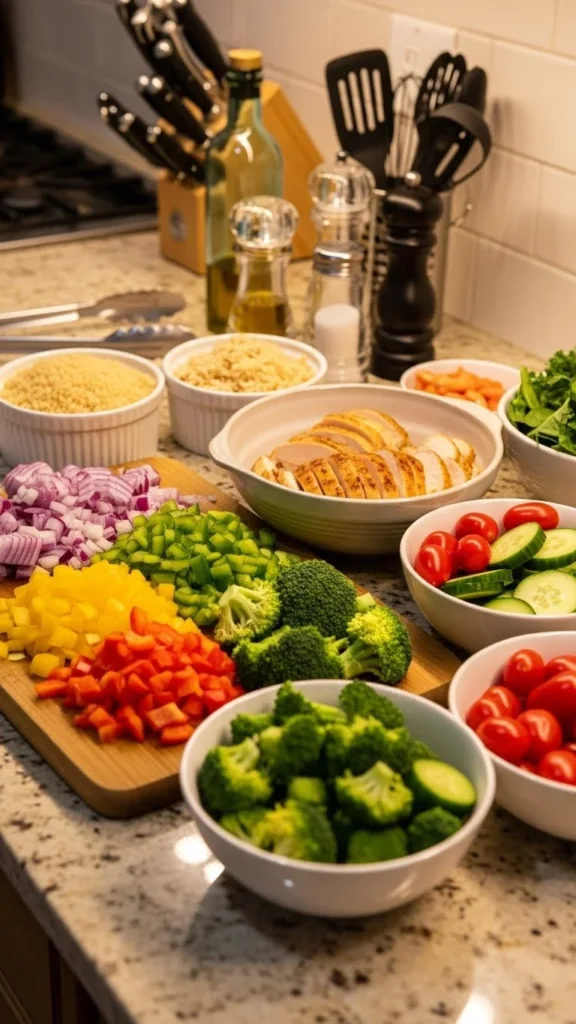
These small adjustments prevent mushy textures and flavor loss.
Cook in Batches to Save Time and Energy
Batch cooking is the heart of freezer meals. You’re already cooking—why not make extra?
Batch-cooking ideas:
- Double soup or stew recipes
- Cook large trays of casseroles
- Roast proteins and vegetables together
- Prepare base meals that can be customized later
Cooking in batches saves time, money, and mental energy during busy weeks.
Use the Right Containers for Freshness
Storage matters more than you think. The wrong container leads to freezer burn and stale flavors.
Best freezer storage options:
- Airtight glass containers
- Heavy-duty freezer bags
- Aluminum pans wrapped tightly
- Vacuum-sealed bags if available
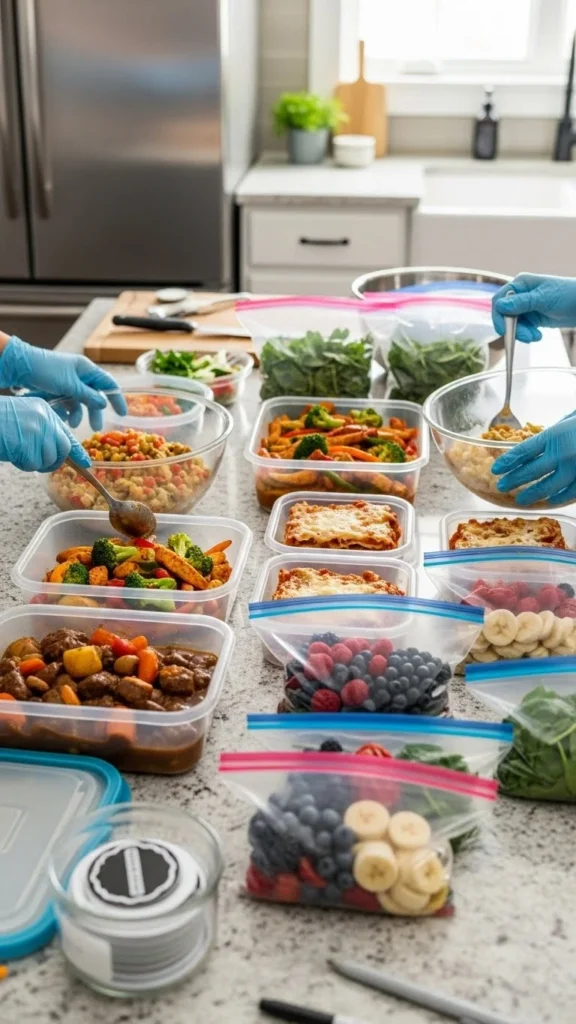
Tip: Remove as much air as possible before sealing—air is the enemy of freshness.
Label Everything Clearly
Weeks later, all frozen meals start to look the same. Labels prevent waste and confusion.
What to include on labels:
- Meal name
- Date cooked
- Reheating instructions
A simple marker and masking tape work just fine—and save you from freezer guesswork.
Freeze Meals the Right Way
How you freeze meals is just as important as how you cook them.
Freezing best practices:
- Freeze meals in single or family-sized portions
- Lay bags flat for faster freezing
- Avoid stacking hot containers
- Keep freezer temperature consistent
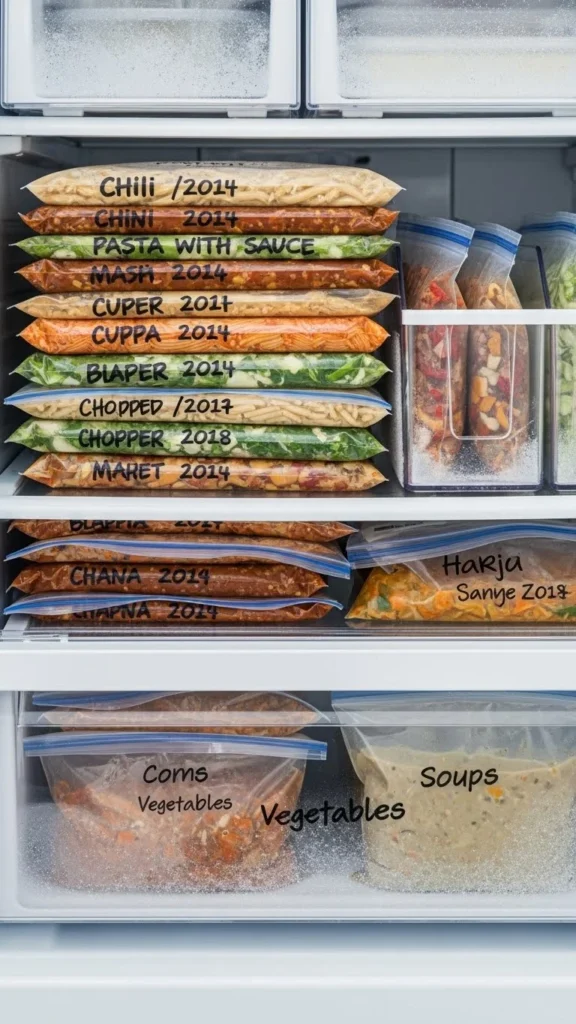
Fast freezing locks in flavor and texture, keeping meals fresh longer.
Reheat Properly to Protect Flavor and Texture
Even perfectly frozen meals can suffer if reheated poorly. Gentle reheating makes all the difference.
Reheating tips:
- Thaw overnight in the fridge when possible
- Reheat slowly on the stove or oven
- Add a splash of water or broth if needed
- Stir halfway through reheating
This brings food back to life instead of drying it out.
Plan a Freezer Rotation System
A simple rotation system ensures nothing gets forgotten.
Easy rotation habits:
- Place newest meals at the back
- Use older meals first
- Keep a freezer inventory list
- Plan one freezer meal night each week
Consistency keeps your freezer fresh and organized.
Customize Freezer Meals After Reheating
Freezer meals don’t have to feel repetitive. Small additions after reheating make them exciting again.
Fresh add-ins:
- Herbs or green onions
- Lemon juice or vinegar
- Cheese or yogurt
- Freshly cooked vegetables
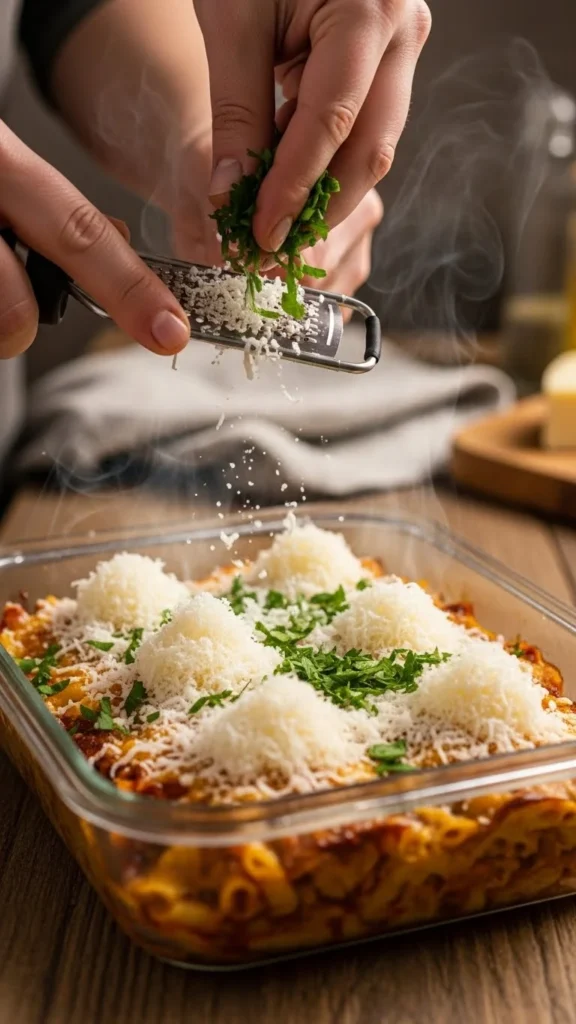
These finishing touches make meals feel freshly cooked.
Final Takeaway
Cooking freezer meals that stay fresh for weeks is all about choosing the right recipes, prepping thoughtfully, storing properly, and reheating with care. When done right, freezer meals become a powerful tool for saving time, reducing stress, and eating well—even on your busiest days.
Save this guide for later and start building a freezer full of meals your future self will love!

Leave a Reply